
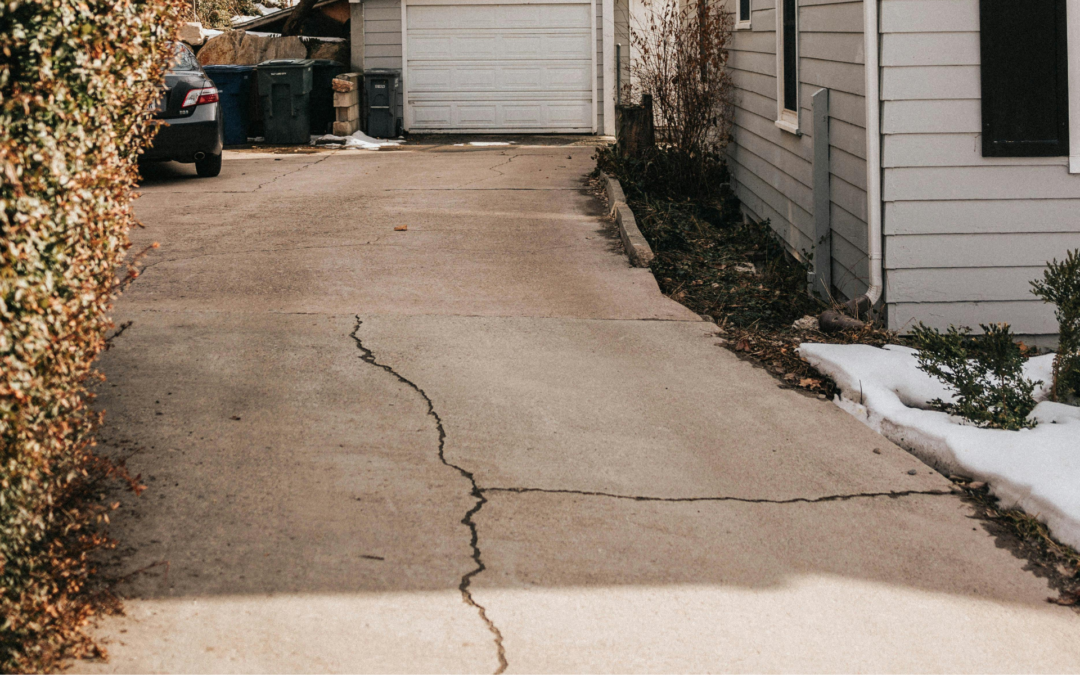
A sinking driveway or patio often starts small. Maybe one corner looks slightly lower than the rest, water starts pooling after it rains, or you notice cracks beginning to form along the surface.
Over time, those small changes become bigger problems. Concrete shifts, gravel sinks, patios become uneven, and driveways develop dips that make them harder to use and more expensive to repair.
If you’re wondering why your driveway or patio is sinking, the issue usually starts underneath the surface. Most sinking problems are caused by unstable ground, drainage issues, or improper site preparation.
For homeowners across Duncan, Victoria, and Vancouver Island, understanding what causes sinking surfaces can help prevent larger structural issues later on.
How to Know if Your Patio or Driveway Is Sinking
Sinking surfaces are not always obvious right away. In many cases, the changes happen gradually over time. Recognizing the signs early is important to catch the issue before it spreads.
Common signs include:
- Water pooling in certain areas
- Visible dips or low spots
- Cracks forming in concrete or pavers
- Uneven sections that feel sloped when walking or driving
- Gaps forming near stairs, foundations, or edges
- Gravel shifting away from certain areas
A driveway sinking in one section may indicate the ground underneath is settling unevenly. A patio sinking near the house can sometimes point to drainage issues or erosion below the surface.
Why Is Your Driveway Sinking?
There are several reasons a driveway may begin to sink over time, but it is generally linked to poor base preparation, water and drainage problems, or repeated pressure in one area.
Poor Base Preparation
One of the most common causes is an unstable base underneath the driveway. When a driveway is installed, the ground underneath should be excavated, levelled, and compacted properly before gravel, asphalt, or concrete is added. If this step is rushed or skipped, the soil below can shift over time.
Organic material like grass, roots, or topsoil may continue breaking down underneath the surface, creating empty space that causes the driveway to settle unevenly. This is especially common in areas where the original site prep was minimal or where fill material was not compacted correctly.
Water and Drainage Problems
Water is one of the biggest causes of sinking driveways and patios. When water consistently flows underneath a driveway, it can slowly wash away soil and weaken the base supporting the surface above it. Over time, this creates voids under the concrete or gravel.
Drainage issues are particularly important on Vancouver Island because of the amount of rainfall throughout the year.
Common drainage-related problems include:
- Water flowing toward the driveway instead of away from it
- Downspouts draining near the surface
- Poor grading around the property
- Standing water after heavy rain
Once water begins eroding the soil underneath, sinking often gets worse over time. Proper grading and trenching will ensure water flows in the ideal way for your yard, and reduces the chance of a sinking driveway or patio.
Heavy Weight and Repeated Pressure
Driveways are constantly exposed to weight from vehicles, trailers, and equipment. If the base underneath is not strong enough, repeated pressure can compress weak areas and create dips.
This is especially common near:
- Parking areas
- Garage entrances
- Driveway edges
- Areas where larger vehicles regularly sit
Over time, the pressure causes sections of the driveway to settle lower than the surrounding surface.
Why Is Your Patio Sinking?
Patios experience many of the same issues as driveways, but there are a few additional causes as well.
Soil Movement
Patios are often built on ground that naturally shifts over time. Soil expands and contracts depending on moisture levels and weather conditions.
If the patio base was not compacted properly during installation, sections may begin settling unevenly after a few seasons.
Tree Roots
Tree roots can affect patios in two ways. Some roots lift sections upward, while others create movement underneath the base that eventually causes sinking in nearby areas. As roots grow and moisture levels change around them, the soil beneath the patio can become unstable.
Erosion Under the Patio
Water runoff can slowly erode the material underneath patios, especially near edges or low areas of the yard. Once the supporting material washes away, sections of the patio begin losing support and sinking downward.
What Causes Dips in a Driveway?
Dips in a driveway are usually caused by uneven settling below the surface. This can happen when:
- Fill material was not compacted properly
- Water erodes part of the base
- The soil underneath naturally shifts
- Heavy loads compress weak areas
Some dips appear gradually, while others become noticeable after heavy rain or seasonal weather changes.
In gravel driveways, dips often form where water repeatedly flows through the same area. In concrete or asphalt driveways, the surface may crack as the base underneath settles unevenly.
How to Stop a Driveway or Patio From Sinking
The right solution depends on what is causing the problem in the first place.
Improve Drainage
Redirecting water away from the area is often one of the most important steps. This may involve:
- Regrading the surrounding area
- Installing drainage systems or trenching
- Adjusting downspouts or runoff patterns
Without fixing the water issue, repairs may only be temporary.
Repair or Rebuild the Base
In many cases, the surface itself is not the main problem. The issue is the unstable ground underneath.
Fixing sinking areas may require:
- Excavating the affected section
- Removing soft or unstable material
- Adding and compacting new gravel or base layers
- Regrading the area properly
If the base is rebuilt correctly, the surface above becomes much more stable long term.
Address the Problem Early
Small sinking areas are usually easier and less expensive to fix than larger structural failures.
Ignoring the issue can lead to:
- Larger cracks
- Drainage damage
- More extensive excavation later
- Increased repair costs
Catching the problem early helps prevent further movement.
Why Proper Site Prep Matters
Most driveway and patio sinking problems start below the surface long before visible damage appears.
Proper excavation, grading, drainage planning, and compaction all play a role in preventing future settling. Rushing site preparation or skipping steps often leads to problems later, especially in areas exposed to regular rainfall and changing soil conditions.
Whether you are installing a new driveway, replacing a patio, or fixing sinking areas, the quality of the ground underneath matters just as much as the finished surface itself.
Driveway and Patio Site Prep in Duncan and Greater Victoria
Across Vancouver Island, changing weather and drainage conditions can take a toll on outdoor surfaces over time. Understanding what causes patios and driveways to sink helps homeowners make better decisions before problems become more serious.
Gold Standard Hauling supports homeowners across Duncan, Victoria, and surrounding communities with excavation, grading, trenching, gravel delivery, and site preparation services that help create stable, long-lasting surfaces.
Taking care of the problem underneath the surface is what helps prevent sinking from coming back again. Contact us today!